Do You Need a Casket for Cremation in Ontario?
Casket for Cremation
A polished casket is a product you can buy. Ontario law does not force you to buy one.
Three separate rulebooks decide what you need: the provincial Act, the crematorium’s by-laws, and the cemetery’s by-laws. Mix those up and you may pay for a metal box that cannot go in the fire. Or you may arrive at a grave with a cloth wrap the staff will not lower.
Cremation: you do not have to buy a casket
The Act does not say “buy a casket before cremation.” Instead, the legal gate is the coroner’s cremation certificate, plus death registration and the burial permit.
The law does block the wrong materials. A crematorium cannot burn a container made of non-flammable or hazardous material, chlorinated plastic, or fibre-reinforced plastic. Small metal handles are different; staff often take those off first.
Then the crematorium’s own by-laws add the shop-floor rule. Sample BAO by-laws say the body must arrive in a burnable casket or container with a top, four sides, and a solid bottom that can roll. Staff will not carry an unwrapped body into the chamber.
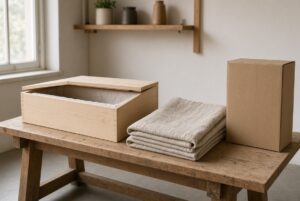
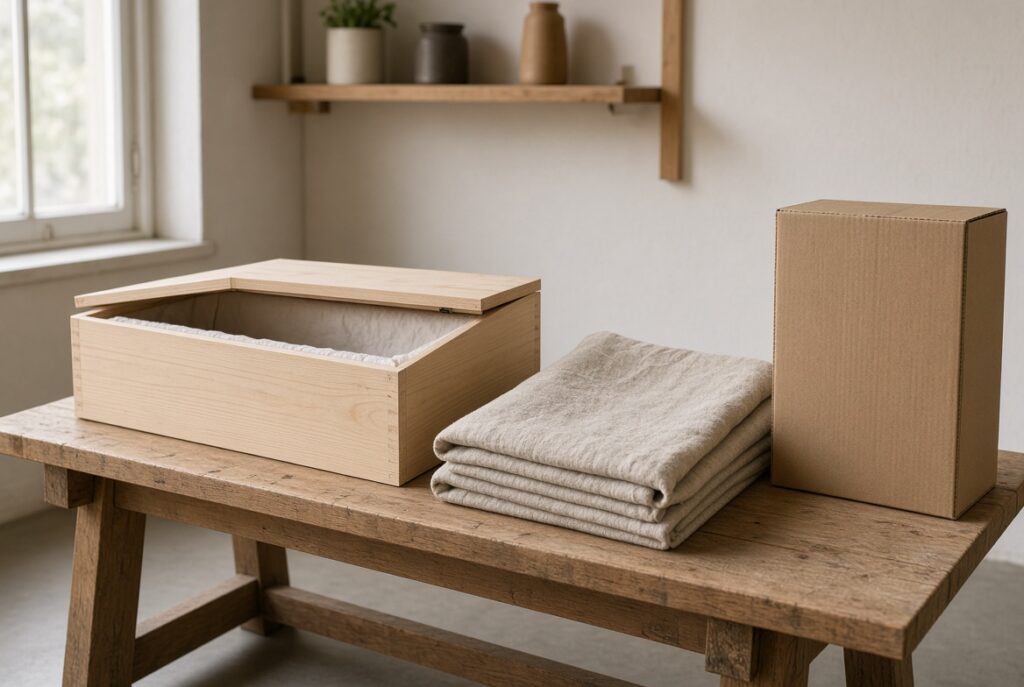
So a direct cremation with no viewing usually uses an alternative container: strong cardboard or a simple wood tray. Many price lists put that at a few hundred dollars. Some packages include it. That box is for safe handling. It is not a “cheap goodbye.”
If you want a visitation with the body present and then cremation, you still have three clear choices:
- A burnable casket (wood or an approved cremation casket) that goes into the chamber after the service.
- A rental casket: a finished outer shell for the chapel, plus a removable insert that staff cremate. You pay a rental fee and you buy the insert. The shell stays with the home and is used again.
- A cardboard viewing tray dressed with cloth for a short private identification. After that, the same tray goes to the crematorium.
Metal burial caskets belong in the ground or in a crypt. They do not belong in the fire.
Where aquamation (water cremation) is offered, the vessel does not use a casket.
Burial: ask the cemetery about shrouds and vaults
BAO’s consumer guide is plain. For a grave, you may use a casket — or you may not. Some cemeteries accept a body wrapped in a shroud. They may still want a rigid board so staff can lower the body safely. That board is a safety tool, not a luxury add-on.
A crypt in a mausoleum is another case. Entombment almost always needs a casket that fits the crypt.
Vaults and grave liners surprise people. Ontario does not order a concrete vault in every cemetery. A medical officer of health can require liners at a site. An operator may require a vault in one section. Even then, the operator must also offer a section where a vault is not required, so you have a choice. Therefore you should read the by-laws for that cemetery. A neighbour’s story is not the rule.
Green-burial ground usually wants the opposite: no embalming, a biodegradable casket or shroud, and no vault. If that is your goal, do not add a liner “so the lawn stays flat” unless the by-laws demand it.
Winter storage adds one more wrinkle. Some cemeteries want the body embalmed and in a casket if it will sit in a holding vault until spring. Ask about that before you choose a shroud in January.
How a rental casket works
A rental is not a used casket sold as new. During visitation, guests see a finished outer casket. The body rests in an insert. After the service, the insert goes to the crematorium — or, less often, into the grave. The shell stays at the funeral home.
Read both prices. You rent the shell and you buy the insert. Then compare that total with a simple wood cremation casket. A rental makes sense when the family wants a formal open-casket room and does not want to burn a costly box. It makes less sense for a 20-minute identification.
If you bring your own container
You may buy a casket from another seller, rent one, or bring your own. If the provider accepts it, they cannot add a penalty fee.
However, they can refuse it if it is unsafe, unfit for the job, or banned by the cemetery or crematorium. They will refuse a metal sealer casket for cremation. They will refuse a homemade box that will collapse on the rollers. So get written confirmation that the container is suitable before you pay a builder.
Rough costs
Prices change by home. Use the printed list, not memory.
| Choice | Typical use | Ballpark (before tax) |
|---|---|---|
| Cardboard / alternative container | Direct cremation | Often $0–$400, sometimes bundled |
| Cardboard viewing tray | Short ID, then cremation | A few hundred more than basic cardboard |
| Rental casket + insert | Visitation, then cremation | Often $800–$2,000 all in |
| Simple wood cremation casket | Service, then cremation | Often $1,000–$3,000 |
| Mid-range wood or steel burial casket | Earth burial | Often $2,000–$8,000+ |
| Shroud + board | Green or shroud burial | Cloth is cheap; cemetery fees are the real cost |
| Outer vault / liner | Some cemetery sections | Often $1,000–$2,000 |
The costly mistake is buying a burial casket for a cremation. Another is paying for a vault in a section that does not require one.
Ask these questions before you sign
- Has the crematorium we will use approved this container in writing?
- If we rent, what is the insert price and what is the rental price?
- Does this cemetery accept a shroud? Do they require a board?
- Is a vault required in this section, and is there a section where it is not?
- For a crypt, what casket size does the crypt take?
- If we supply our own container, will you charge anything extra?
For cremation you need a dignified, burnable container that can roll. For a grave you need whatever that cemetery’s by-laws say. You do not need the first polished casket on the showroom floor to make the death legal.