Cremation is a choice that offers flexibility, but it often leaves families with an unresolved question: “Where do we go to remember?”
While keeping an urn at home or scattering ashes in nature may seem like simple solutions, they often lack the permanence that helps families heal. Years down the road, children and grandchildren often search for a physical place—a rock, a plaque, or a grave—where they can connect with their history.
For those looking to create a lasting legacy, modern cemeteries offer sophisticated options that go far beyond a simple hole in the ground. Here are the most meaningful ways to secure a permanent place for your loved one.
1. The Columbarium: A “Condo” for the Soul
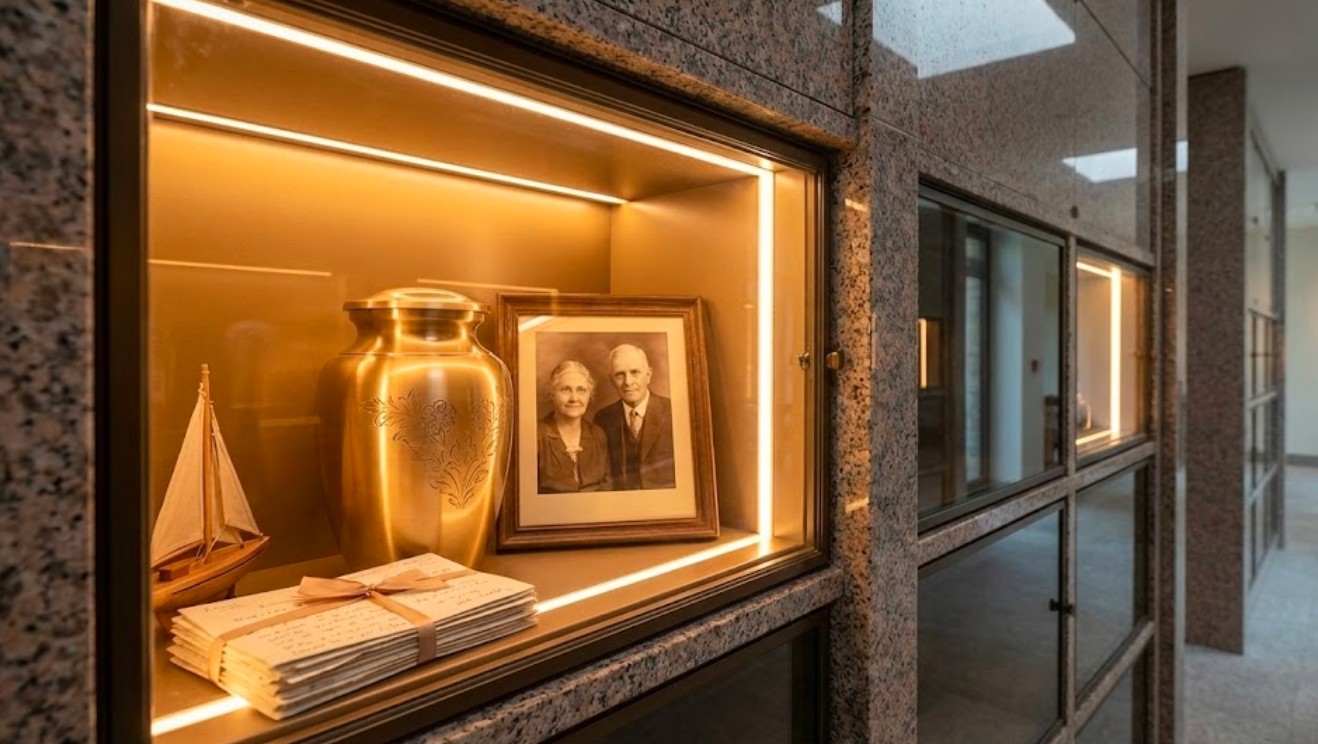
One of the most popular and prestigious choices in modern cemeteries is the Columbarium—an above-ground structure comprised of small compartments called “niches.”
- Granite Niches: These offer a classic, dignified appearance with a sealed stone front, typically engraved with names and dates.
- Glass-Front Niches: Available in indoor mausoleums, these are the premium choice. They allow you to display not just the urn, but also personal mementos—photos, jewelry, or a favorite baseball—creating a “time capsule” of personality that tells a story to future visitors.
- The Benefit: It provides a comfortable, climate-controlled environment for visitation year-round, regardless of rain or snow.
2. Urn Burial: Reuniting the Family
If your family already owns a traditional cemetery plot, you may be sitting on valuable real estate you didn’t know you could use.
- Maximizing Family Land: Most cemeteries allow for multiple urn burials on top of an existing casket grave. This is an excellent way to keep generations together in one location.
- Headstones and Markers: Choosing urn burial allows you to install a permanent granite marker or bronze footstone. This ensures your name is literally “carved in stone” for centuries, rather than lost to time.
3. The Scattering Garden: Nature with a Name
Many families love the idea of returning to nature but worry about the lack of permanence. Once ashes are scattered in a public lake or forest, there is no going back, and there is no specific spot to lay a flower.
A Cemetery Scattering Garden offers the perfect solution.
- Protected Grounds: Unlike public land, which can be developed or closed off, a cemetery garden is protected by law in perpetuity.
- Memorial Walls: The key difference is the memorial. These gardens typically feature beautiful granite walls or bronze pillars where you can purchase a plaque. This gives the family a specific focal point to touch and visit, ensuring the person is never “lost.”
4. Cenotaphs: Remembered Everywhere
Even if a family chooses to scatter ashes elsewhere—or if a loved one is lost overseas—you can still purchase a Cenotaph.
- This is a memorial marker placed in a cemetery for someone whose physical remains are not there. It provides the crucial “place of reference” for descendants researching their genealogy or paying respects.
Why “Free” Isn’t Always Free
While scattering on public land (Crown land) is legally permitted in some areas, it comes with significant emotional risks.
- Loss of Access: Public trails can become private property, or physical landscapes can change due to erosion or development.
- No Trace: Without a physical marker, future generations often lose track of where their ancestors are resting.
Summary
A funeral ends in a day, but a legacy lasts forever. By choosing a permanent niche, plot, or memorial plaque, you aren’t just buying a piece of stone; you are buying a guarantee that you and your loved ones will be remembered, visited, and honored for generations to come.
Leave a Reply