CPP Death Benefit in Canada (2026): Amount, $5,000 Top-Up, Who Gets It, and How to Apply
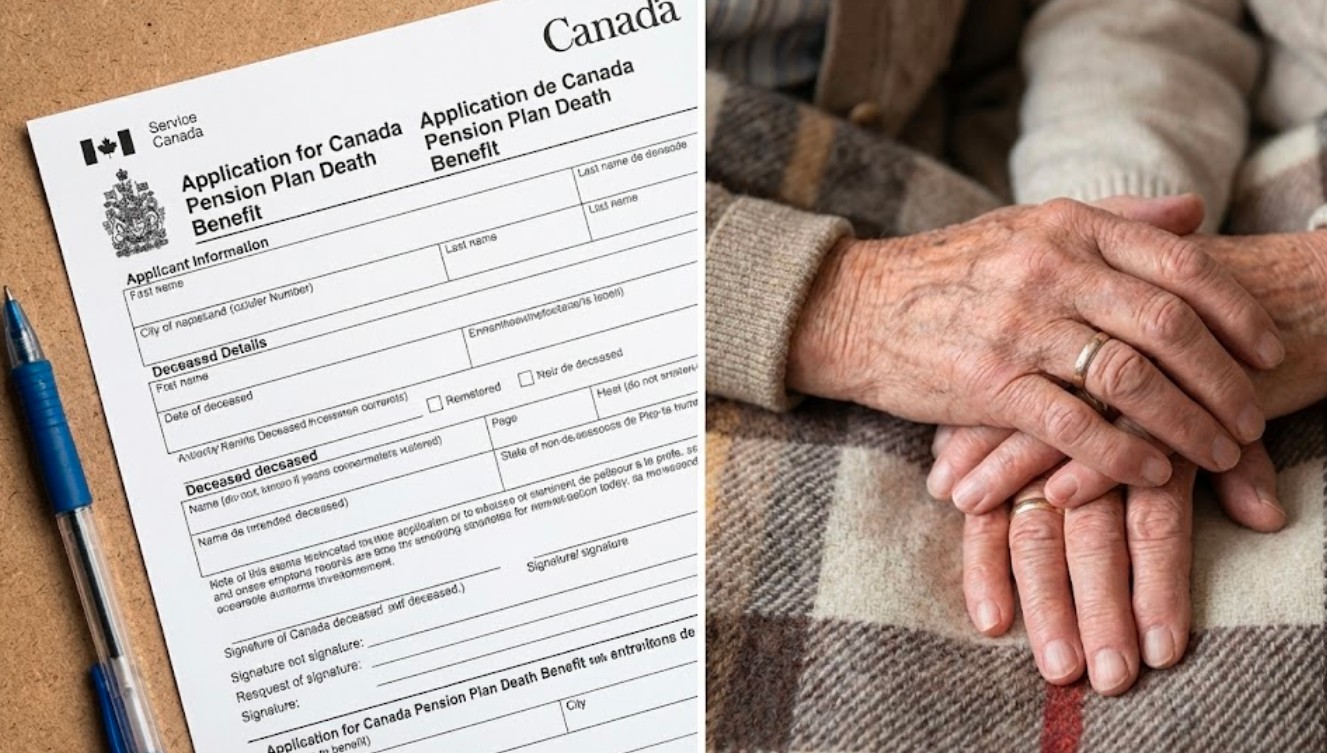
CPP Death Benefit
When someone dies in Canada, families often hear that “CPP will help with the funeral.” That is only partly true.
The Canada Pension Plan death benefit is a one-time lump sum, usually $2,500. For some deaths on or after January 1, 2025, there is a $2,500 top-up, for a maximum of $5,000. It is useful cash at a hard time. It is not funeral insurance, it is not automatic, and it almost never covers a full traditional funeral.
This guide covers what the benefit pays in 2026, who can receive it, how it differs from the monthly survivor’s pension, and how to apply without missing money.
How much is the CPP death benefit in 2026?
The basic death benefit has been a flat $2,500 since 2019. It is not indexed to inflation.
For deaths on or after January 1, 2025, Service Canada may add a $2,500 top-up. The most anyone can receive is $5,000.
| Part of the benefit | Amount | When it is paid |
|---|---|---|
| Basic death benefit | $2,500 | Eligible contributor (most working Canadians who paid into CPP) |
| Top-up (deaths on/after Jan 1, 2025) | + $2,500 | Extra conditions below |
| Maximum total | $5,000 | Basic + top-up |
The top-up is not automatic just because the death happened after 2024. The deceased must first qualify for the basic benefit and:
- never have received a CPP or QPP retirement pension, disability benefit, or post-retirement disability benefit, and
- have no surviving spouse or common-law partner who is eligible for a CPP survivor’s pension.
In plain language: the extra $2,500 is meant for estates that did not already get a CPP pension paid out, and that do not have a spouse who will receive ongoing survivor payments. If the person was already collecting CPP, or leaves an eligible spouse, the death benefit stays at $2,500.
Amounts can be lower if eligibility depends on an international social security agreement.
Quebec note: If the person only contributed to the Quebec Pension Plan (QPP), lived in Quebec at death, or last lived in Quebec while outside Canada, contact Retraite Québec. CPP and QPP contributions are combined when both apply. The QPP death benefit rules are similar on the basic amount, but the $2,500 federal top-up is a CPP feature.
Who qualifies?
Eligibility is based on the deceased person’s CPP contributions, not on who is applying.
The deceased generally must have contributed to CPP for:
- at least one-third of the calendar years in their contributory period, with a minimum of three years, or
- 10 calendar years.
Most people who worked in Canada for several years meet this test. Years under QPP can count toward the combined calculation.
Who gets the money?
The death benefit is designed to help with funeral and immediate estate costs. It is paid to one applicant, in a fixed order.
1. The estate (first in line)
If there is an estate, the executor named in the will or the court-appointed administrator applies. Service Canada expects the executor to apply within 60 days of the date of death.
No will does not automatically mean “no estate.” An estate can still exist under intestacy, with an administrator appointed by the court.
2. If there is no estate, or the executor does not apply
Payment can go to the next person who applies, in this order:
- the person or institution that paid, or is responsible for paying, the funeral expenses
- the surviving spouse or common-law partner
- the next of kin
The 60-day window is about priority, not a hard expiry of the benefit. After 60 days, someone lower on the list can apply. If you paid the funeral invoice and no executor has claimed the benefit, do not wait.
A common-law partner is generally someone who lived with the contributor in a conjugal relationship for at least one year immediately before the death.
The survivor’s pension is separate
The death benefit is a one-time cheque. The CPP survivor’s pension is a monthly payment to the legal spouse or common-law partner. You apply for it separately.
Maximum monthly amounts for new benefits in 2026:
| Survivor’s age | Maximum monthly amount (2026) |
|---|---|
| Under 65 | $803.54 |
| 65 and older | $904.59 |
These are maximums. The actual amount depends on how much and how long the deceased contributed, and on the survivor’s age when the contributor died.
If the survivor already receives their own CPP retirement pension, Service Canada combines the two. Combined payments are capped; a person cannot collect a full retirement pension plus a full survivor’s pension. The 2026 maximum combined survivor/retirement pension (retirement at 65) is $1,531.56 per month.
Apply for the survivor’s pension as soon as you can. Retroactive monthly payments are generally limited to about 12 months. Waiting does not usually increase the lump-sum death benefit, but it can cost you months of survivor income.
Children’s benefit (often missed)
Dependent children of a deceased CPP contributor may qualify for a separate monthly surviving child’s benefit:
- $307.81 per month (2026) for a child under 18, or age 18–25 in full-time school
- $153.91 per month (2026) for a child age 18–25 in part-time school
This is not the death benefit. It is another application, and families with school-age or university-age children should ask Service Canada about it at the same time.
Important rules that catch families off guard
It is taxable.
The CPP death benefit is taxable income for whoever receives it. Do not report it on the deceased person’s final T1 return.
- If the estate receives it, it is generally reported on the estate’s T3 return (unless it is the estate’s only income and is passed through).
- If an individual receives it directly, it is reported on that person’s T1 (typically line 13000), and a T4A(P) slip is issued.
Set a little aside for tax. At a 25% marginal rate, $2,500 leaves about $625 that should not be spent as if it were tax-free.
It is not automatic.
Service Canada does not mail a cheque because a death was registered. Someone must apply.
Do not use it as the funeral-home deposit.
Processing is typically 6 to 12 weeks after Service Canada has a complete application. Funeral homes usually want a deposit in days, not months. Plan to pay the funeral from savings, insurance, or a funeral home payment plan, then reimburse yourself when CPP arrives.
Notify Service Canada of the death anyway.
If the person was already receiving CPP or OAS, those benefits must be stopped. Payment is allowed for the month of death; anything after that is an overpayment that the estate will have to repay. Call 1-800-277-9914 with the Social Insurance Number.
How to apply
Apply online through a My Service Canada Account (MSCA), or by mail with Form ISP1200 (Application for a Canada Pension Plan Death Benefit).
You will typically need:
- the deceased’s Social Insurance Number
- proof of death (funeral director’s statement of death or provincial death certificate)
- your own SIN
- proof you are the executor/administrator, or that you paid the funeral, if you are not applying as the estate
- proof of relationship if you are also applying for the survivor’s pension (often Form ISP1300)
Copies are usually enough at first. Service Canada can still ask for originals or certified copies.
Practical sequence for families
- Get the funeral contract and a proof-of-death document from the funeral home.
- If you are the executor, apply for the death benefit within 60 days.
- Apply for the survivor’s pension and, if relevant, the children’s benefit at the same time.
- Tell Service Canada to cancel the deceased’s own CPP/OAS.
- Keep the funeral invoice. If no estate applies, the person who paid the funeral is next in line.
What the $2,500 actually covers
Treat the CPP death benefit as assistance, not coverage.
In 2026, a simple direct cremation in many parts of Canada can fall in the $1,500–$3,500 range. A cremation with a memorial service is often $3,500–$8,000. A traditional funeral with burial commonly runs $8,000–$15,000+, and more in large cities once cemetery plot and marker costs are included.
So $2,500 may cover a large share of a no-frills cremation. It will not cover a full burial service. Even the $5,000 top-up is only a partial offset for most traditional funerals.
That is why pre-planning, a small dedicated savings cushion, or life insurance still matters. The CPP cheque arrives weeks later and is taxable.
Summary
- Basic CPP death benefit: $2,500, one time, taxable.
- Possible top-up since January 1, 2025: another $2,500 (maximum $5,000) if the person never collected CPP/QPP retirement or disability benefits and leaves no eligible surviving spouse.
- Paid first to the estate; then to whoever paid the funeral; then spouse; then next of kin. Executors should apply within 60 days.
- Apply with ISP1200 (or MSCA). Expect 6–12 weeks.
- The monthly survivor’s pension and children’s benefit are separate and often worth more over time than the lump sum.
For official rules and forms, use Service Canada: CPP death benefit and 1-800-277-9914.
This article is general information for Canadian families, not legal, tax, or benefits advice. Amounts and forms change. Confirm details with Service Canada and a tax professional for your situation.