CPP Survivor’s Pension in Canada (2026): Who Qualifies, How Much You Get, and How to Apply
CPP Death Benefit
When a spouse or common-law partner who contributed to the Canada Pension Plan dies, the survivor may be entitled to a monthly CPP survivor’s pension — for life. It is separate from the one-time CPP death benefit, it does not start automatically, and far too many Canadians apply late and permanently lose money. Here is how the CPP survivor’s pension 2026 works — who qualifies, how much you get, and how to apply.
Who Qualifies for the CPP Survivor’s Pension?
You must have been the legal spouse or common-law partner (living together in a conjugal relationship for at least one year) of the deceased CPP contributor. The contributor must also have met the minimum contribution test: contributions in at least one-third of the years in their contributory period (minimum three years), or in at least ten calendar years. There is no minimum age for the survivor, although the amount depends on your age. A separate CPP children’s benefit may also be payable for dependent children under 18, or aged 18–25 attending school full-time.
How Much Is the Survivor’s Pension in 2026?
Service Canada first calculates the retirement pension your partner received — or would have received at 65 if they died younger — and then applies a formula based on your age:
- Age 65 or older: 60% of the contributor’s retirement pension. The 2026 maximum is $904.59 per month; the average new recipient receives roughly $340, because the amount tracks how much and how long your partner contributed.
- Under age 65: a flat-rate portion ($238.17 per month in 2026) plus 37.5% of the contributor’s retirement pension. The 2026 maximum is $803.54 per month; the average new recipient receives roughly $550.
Amounts are indexed to inflation every January.
If You Already Receive CPP: The Combined Cap
If you receive your own CPP retirement or disability pension, the survivor’s pension is not simply added on top — the two are combined into a single monthly payment subject to a maximum. In 2026, the combined survivor’s-plus-retirement pension at 65 is capped at $1,531.56 per month. This surprises many widows and widowers, so factor it into retirement planning rather than counting on both full amounts.
Good News: It Lasts for Life, Even If You Remarry
The survivor’s pension is paid for the rest of your life. It does not stop if you remarry or enter a new common-law relationship. If you are widowed more than once, you receive only one survivor’s pension — the larger of the two. The pension is taxable income; you can ask Service Canada to withhold tax at source (form ISP3520CPP) to avoid a surprise bill at tax time.
How and When to Apply
Under the CPP survivor’s pension 2026 rules, apply as soon as possible after the death. CPP can only back-pay a maximum of 12 months (the 11 months before you apply, plus the month of application), so every month of delay can mean a month of pension lost forever. You can:
- Apply online through your My Service Canada Account, or
- Complete paper form ISP1300 (CPP Survivor’s Pension and Children’s Benefits) and submit it to Service Canada with the requested documents — you will need both your SIN and the deceased’s SIN, plus proof of death and your marriage certificate or common-law declaration.
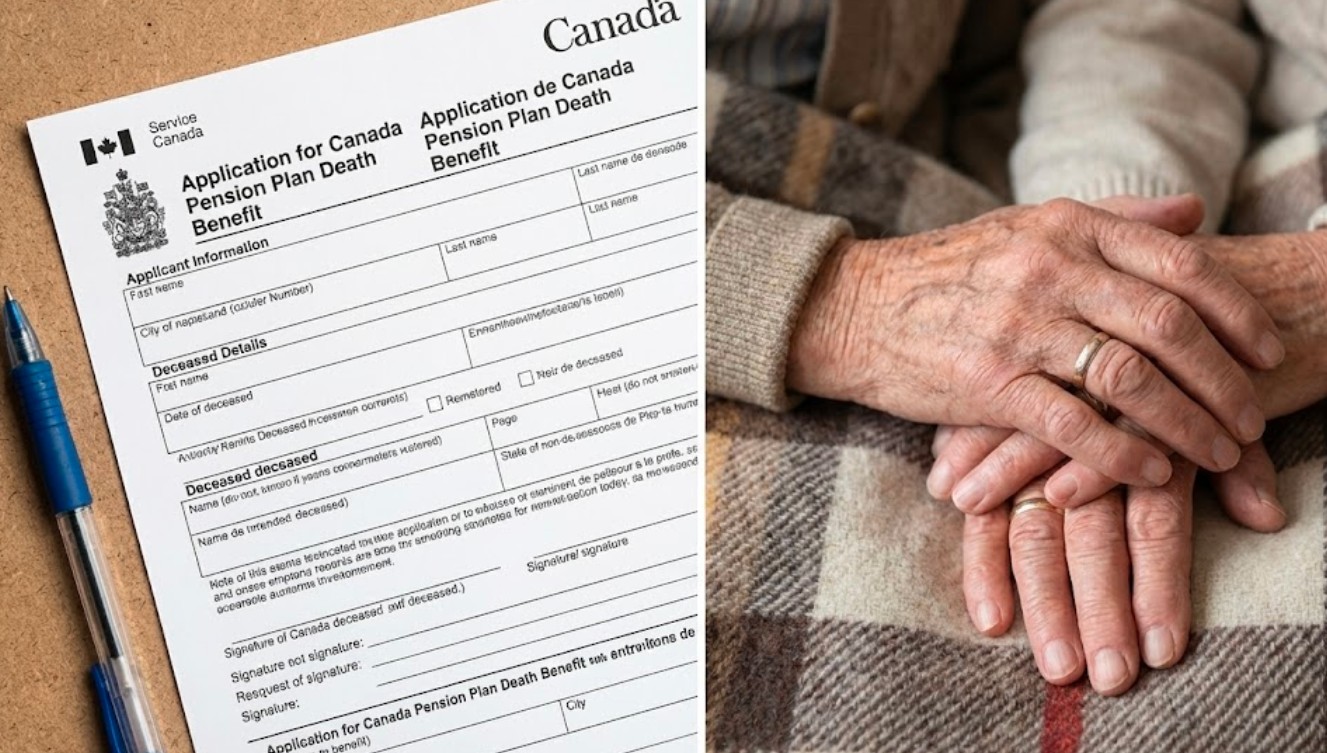
The first payment normally arrives about 6 to 12 weeks after Service Canada receives a complete application, and starts with the month after the death. While you are at it, make sure someone notifies Service Canada of the death so your partner’s own CPP and OAS payments stop — overpayments must be repaid by the estate. And if the estate has not yet claimed it, the separate CPP death benefit is a one-time payment of $2,500 — up to $5,000 in some cases for deaths after January 1, 2025 — applied for on form ISP1200, ideally within 60 days. Full details are on the Service Canada survivor’s pension page.
Losing a partner is hard enough without leaving government money unclaimed. If you take one step this week, make it this application.