Grief Support in Ontario: Where to Find Help After a Death
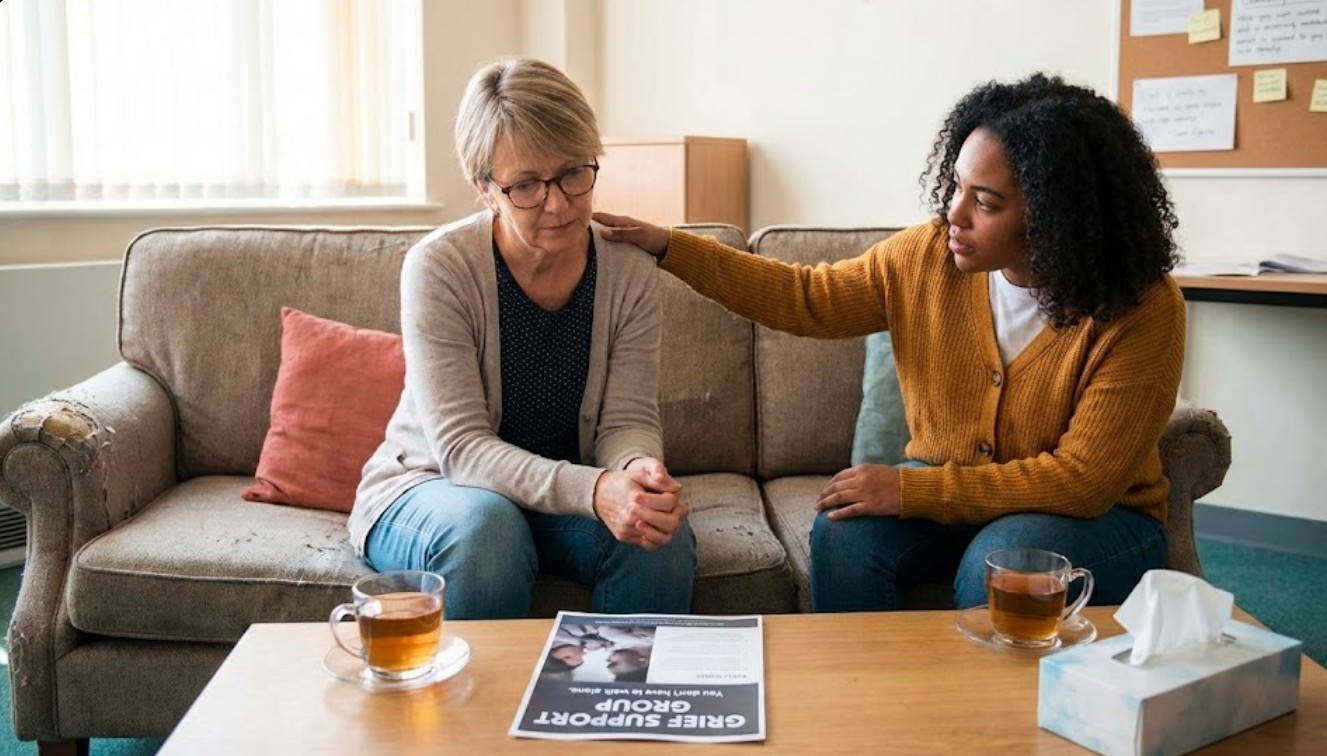
Grief Support
Losing someone you love can leave you exhausted, foggy, and unsure where to turn. In Ontario, you do not have to figure that out alone. The province has a wide mix of free peer groups, hospice programs, online tools, and 24/7 helplines — from Toronto and Hamilton to Ottawa, London, and smaller towns.
This guide is a practical starting point. Use what fits. Skip what does not. Grief does not follow a timetable, and the “right” support is the one you can actually reach.
If you need help right now
If you feel unsafe, unable to cope, or worried about suicide, contact help immediately:
- 9-8-8 — Canada’s Suicide Crisis Helpline. Call or text, 24/7, in English and French.
- 211 Ontario — Dial or text 211, or visit 211ontario.ca. Navigators can find local grief groups, counselling, and practical help in 150+ languages.
- Kids Help Phone — For children, teens, and young adults: call 1-800-668-6868 or text 686868.
- Hope for Wellness Helpline — For First Nations, Inuit, and Métis people: 1-855-242-3310 or hopeforwellness.ca.
These lines are for crisis and navigation. The programs below are for ongoing grief support.
Why support after a death can help
Grief is personal. Some people want quiet. Others want to talk. Many people feel both, on different days.
Support will not “fix” the loss. It can:
- reduce isolation
- put language to what you are feeling
- offer coping tools for sleep, work, family, and anniversaries
- help you tell the difference between painful but expected grief and grief that needs clinical care
Ontario’s communities are culturally diverse. Mourning practices differ by faith, language, and family tradition. Look for a group or counsellor that respects how your family grieves.
Peer support is not the same as therapy. Most Bereaved Families of Ontario (BFO) groups are led by trained volunteers who have also been bereaved. They listen and share. They do not diagnose or treat mental illness. If grief is overwhelming your health, work, or safety, ask for a licensed counsellor or your family doctor as well.
Province-wide grief support resources
Bereaved Families of Ontario (BFO)
BFO is the backbone of free peer grief support in Ontario. Affiliates operate across the province, including Toronto, Ottawa, Halton/Peel (Centre for Grief and Healing), York Region, Southwest, South Central (Hamilton area), Kingston, Peterborough, and others.
Typical offerings:
- peer support groups by type of loss (partner, parent, child, sibling, suicide, and mixed loss)
- limited one-to-one peer support in some regions
- programs for children and families
- virtual and in-person options
Services are generally free. Groups are facilitated by trained volunteers with lived experience, not by therapists. Start at bereavedfamilies.net and look up your local affiliate.
MyGrief.ca, KidsGrief.ca, and YouthGrief.ca
These free sites from Canadian Virtual Hospice are among the most useful online tools available to Ontarians.
- MyGrief.ca — Self-paced modules for adults: understanding grief, family dynamics, partner loss, suicide, MAiD, prolonged grief, and more.
- KidsGrief.ca — For parents and educators supporting children after a death or during a serious illness.
- YouthGrief.ca — Built by grieving youth, for grieving youth.
Use them from home, at your own pace. They complement — they do not replace — a local group or counsellor.
Pregnancy and Infant Loss Network (PAIL)
PAIL Network, based at Sunnybrook, offers free peer support to Ontario families after miscarriage, stillbirth, termination, neonatal death, or the death of a baby up to 12 months. Support is also available for pregnancy after loss and for the non-birthing partner.
Call 1-888-303-7245 or visit pailnetwork.sunnybrook.ca.
Local hospices
Many community hospices offer free or low-cost bereavement groups and short-term grief support, even if your loved one was not a hospice patient. Programs vary by region and may include adult groups, writing or art groups, and support for young adults.
Search by postal code at findhospicecare.ca or call Hospice Palliative Care Ontario at 1-833-621-0728.
CMHA Toronto Grief Support Program
Canadian Mental Health Association Toronto runs a free drop-in grief program (often called the Grief Room) for adults 18+. Sessions mix gentle education with discussion. Loss of a person is the most common reason people attend, but the program also welcomes other forms of loss. Check current dates at cmhato.org. Other CMHA branches may offer different local services.
GriefShare
GriefShare is a structured, usually church-hosted 13-week program with video teaching and small-group discussion. It is faith-informed. Many Ontario churches in Toronto, Hamilton, Niagara, Belleville, and elsewhere run groups in fall and winter. Search at griefshare.org. Some groups charge a small workbook fee; scholarships are often available.
Specialized programs
- Healing Hearts (Moms Stop the Harm) — Free peer groups for people grieving a death related to substance use. Ontario has virtual and some local options. See healingheartscanada.org.
- Distress Centres of Greater Toronto — Survivor Support Program — Support after suicide or homicide for GTA residents.
- Circle of Care (Sinai Health) — Free groups and volunteer support for Ontario adults grieving a spouse, parent, or close family member or friend, generally within the first year. They do not take infant loss, child loss under 18, or homicide cases.
- Journey Through Loss (London area) — Long-running free group for death-related grief, with in-person and virtual sessions. Intake: 519-782-5515 or journeythroughloss.ca.
- LivingMyCulture.ca — Conversations from many cultural communities about illness, caregiving, and grief.
Bereavement Ontario Network (BON) is useful if you work in the field. It is a professional network, not a public walk-in service. Families are usually better served by BFO, 211, a hospice, or PAIL.
How funeral homes fit in
The Bereavement Authority of Ontario (BAO) regulates funeral, burial, cremation, and related services. It does not provide grief counselling. BAO does tell families that local funeral homes often keep lists of nearby groups and that Bereaved Families of Ontario is a free starting point.
When you are ready, ask the funeral home that handled the service for their current local list. Many homes also host memorial gatherings or can point you to a hospice or BFO affiliate. The BAO’s free Consumer Information Guide is at thebao.ca.
Support for children and teens
Children and teens grieve in bursts. They may look “fine” at school and fall apart at bedtime. They need honest, age-appropriate language and adults who can tolerate their questions.
Helpful starting points:
- KidsGrief.ca for parents and teachers
- YouthGrief.ca for teens and young adults
- BFO affiliates with children’s or family programs
- Children and Youth Grief Network
- Kids Help Phone
- School social workers and guidance staff
If a child talks about wanting to die, or their functioning collapses for weeks, involve a doctor or a children’s mental health service the same day.
How to choose the right support
- Name the loss. Partner, parent, child, friend, pregnancy, suicide, overdose, and anticipated death after a long illness can all feel different. Loss-specific groups exist for a reason.
- Pick a format you will actually use. In-person, Zoom, one-to-one, or a self-paced site. Privacy matters as much as convenience.
- Ask what it is — and what it is not. Peer group, faith-based program, hospice service, or licensed counselling? Each has a different job.
- Start local. Search 211, your BFO affiliate, and findhospicecare.ca with your city or postal code.
- Give it two or three sessions. The first meeting is often the hardest. If the fit is wrong, try another group. You are allowed to leave.
- Watch the calendar. Many closed groups start in September, January, and spring. Open drop-ins run year-round.
When grief needs more than a group
Most grief is painful and still within the range of a normal response to loss. Get extra help if, months later, you cannot function at work or at home, you feel numb or stuck, you are using alcohol or drugs to cope, or you have thoughts of harming yourself.
Ask your family doctor for a referral. You can also search Psychology Today for an Ontario therapist who lists grief or bereavement, or contact your local CMHA branch. If cost is a barrier, say so — some agencies use sliding scales or funded short-term counselling.
A quiet next step
You do not have to do everything on this list. One phone call, one module on MyGrief.ca, or one BFO intake form is enough for today.
If you are in Toronto, Hamilton, Ottawa, or anywhere else in Ontario, start with 211 or your nearest Bereaved Families of Ontario affiliate. Healing is not a straight line. Reaching out is not a weakness. It is how many families in this province get through the first year — and the years after that.