Buying a Cemetery Plot in Canada: What the Price Includes, What It Doesn’t, and Whether You Can Sell It
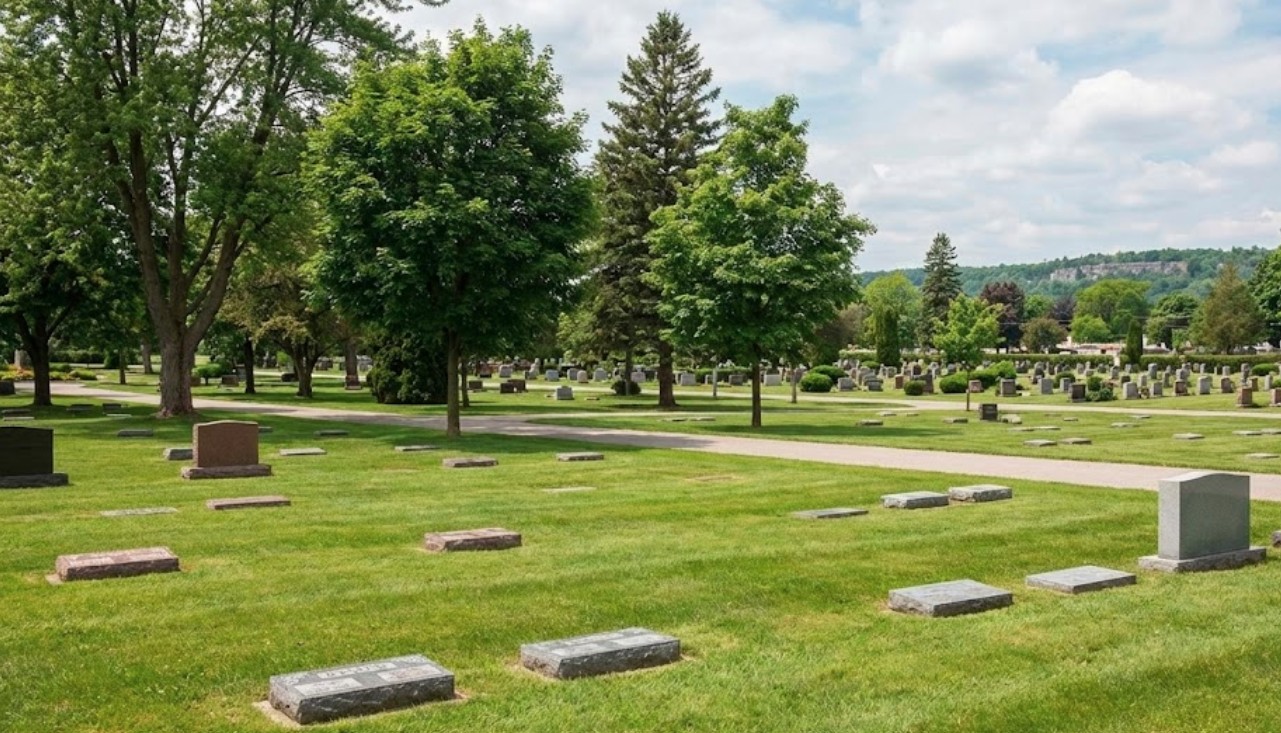
Burlington Memorial
A cemetery plot listing looks like real estate. It is not.
In Canada you almost never buy the dirt. You buy interment rights: the legal right to bury human remains in a specific grave, crypt, or niche, subject to the cemetery’s by-laws. The land stays with the cemetery. That distinction matters when you add fees, when you want a certain headstone, and if you later move or change your mind.
1. The sticker price is only one piece
A quoted plot price usually has three layers. Families who budget only for the first one get a surprise at the time of death.
Interment rights
This is the “plot.” It is the right to use that space, often in perpetuity in provinces such as Ontario. It is not a deed to land you can build on or treat like a cottage lot.
Opening and closing fees
This is the cemetery’s charge to dig, prepare, and close the grave — or to open a niche. It is often not included in the purchase price and is billed at the time of burial. Weekday casket opening-and-closing fees commonly run from several hundred dollars in a small municipal cemetery to $1,000–$2,500+ in larger or urban grounds. Winter, Saturday, Sunday, and holiday burials usually cost more. Cremation in-ground or niche openings cost less. Ask for this number in writing before you buy.
Care and maintenance (once called perpetual care)
A portion of what you pay is deposited into a regulated trust. Only the income from that fund is used to cut grass, keep roads, and maintain the grounds after the cemetery stops selling new plots.
Rates are set by provincial law, not by a salesperson’s estimate. In Ontario, the minimum contribution for an in-ground grave is generally 40% of the price-list amount or a set dollar floor, whichever is greater ($290 for a standard-size lot, $175 for a smaller one). Niches are typically 15% (or $165, whichever is greater). Crypts are typically 20% (or $830). Other provinces use different percentages; always ask what is being deposited and whether it is refundable. In Ontario, that contribution is generally not refundable after the cooling-off period.
Costs that sit outside the plot price
- Outer burial container, vault, or grave liner (required by some cemeteries)
- Monument or marker, plus a foundation/installation fee
- A separate care contribution when a monument is installed
- HST or GST
- Transfer or administration fees later
- Disinterment fees if the remains ever have to be moved (these can be thousands of dollars)
Ask for the cemetery’s full price list, not a single “from” number.
What families actually pay
Prices vary more by city than by province.
| Setting | Typical interment-rights range (2026, plot only) |
|---|---|
| Small-town or municipal cemetery | Often $1,000–$4,000 |
| Mid-size city | Often $3,000–$8,000 |
| Major urban / historic cemetery (Toronto, Vancouver, Montréal) | $8,000–$20,000+; prestige sections much higher |
| Cremation lot or columbarium niche | Often a fraction of a full casket grave |
Add opening and closing, a marker, and tax, and a “$4,000 plot” can become an $8,000–$12,000 cemetery bill before the funeral home invoice. GTA cemetery land is among the most expensive in the country; a single plot in a sought-after Toronto cemetery can exceed what a rural family pays for the entire funeral.
Municipal cemeteries often charge residents less than non-residents. If you are buying in a town you do not live in, ask which rate applies.
2. Types of space
Single grave
One casket. Many cemeteries also allow one or more urns in the same lot later. Confirm the maximum number of interments in writing.
Double-depth (or “companion”) grave
One surface lot dug deeper so two caskets can be stacked. Usually cheaper than two side-by-side lots. The first burial is placed deeper. Ask whether the cemetery actually offers this in that section — not every soil type or water table allows it.
Side-by-side companion lots
Two graves purchased together. Easier for matching monuments; costs more land.
Cremation plot
A smaller in-ground space for one or more urns. Lower price than a casket grave; still has opening-and-closing and marker rules.
Columbarium niche
An above-ground compartment in a wall or building. Indoor niches cost more than outdoor ones; eye-level rows cost more than top or bottom. Check niche interior dimensions against the urn you plan to use before you buy.
Mausoleum crypt
Above-ground casket space. Highest cost; different care-fund rate.
Family estate or multi-grave plot
Several lots sold as a unit, often with one large monument. In some provinces, if any grave in a multi-lot package has been used, the unused graves may not be eligible for the same buyback rules. Read that clause.
Scattering garden
A licensed area in the cemetery for scattering ashes. You may be buying a “scattering right,” not a grave. Private-property scattering rules differ by province; in Ontario you generally cannot run a paid scattering site unless it is a licensed cemetery.
3. Location still drives the price
Urban historic grounds cost more than a township cemetery 40 minutes out. Inside one cemetery, prices move with:
- Section (old tree-lined vs new undeveloped field)
- Road or chapel proximity
- View
- Whether upright monuments are allowed
- Religious or community sections with their own wait-lists
Walk the section. Photos on a website hide drainage, traffic noise, and whether the “premium” lot sits beside a maintenance yard.
4. Monument rules can kill the plan you had in mind
By-laws attach to the section, not just the cemetery.
Ask, before money changes hands:
- Flat markers only, or upright monuments?
- Maximum height, width, thickness, and materials?
- Bronze on granite only?
- Must the cemetery install the foundation?
- How many names can go on one stone?
- Are benches, plantings, solar lights, or winter wreaths allowed?
A “memorial park” section that allows only flush-to-the-ground markers is cheaper to maintain and often cheaper to buy. It will not accept the tall family stone you already priced at a monument shop.
5. Can you sell it later?
Yes, sometimes — with limits that the original draft oversimplified.
Rules differ by province. Ontario (Bereavement Authority of Ontario / Funeral, Burial and Cremation Services Act) is the clearest example and a useful template for questions to ask elsewhere.
Cooling-off period
Unused interment rights purchased in advance can usually be cancelled within 30 days for a full refund.
After 30 days, two paths
- Cemetery by-laws allow private resale
You may sell unused rights to another person, but:- the transfer must go through the cemetery
- you cannot sell above the cemetery’s current price-list amount for a comparable lot
- an administration fee applies
- you cannot buy plots as inventory to flip unless you are a licensed operator
- Cemetery by-laws prohibit private resale
You can cancel and require the cemetery to repurchase. The refund is generally the greater of what you paid or the current list price, minus the amount already paid into the care-and-maintenance fund. The care contribution stays in the trust. A used grave in a multi-lot package may not qualify.
That is the opposite of “they refund your original price minus a fee.” If prices have risen, the current list price can work in your favour. The care-fund slice still does not come back.
Keep the Interment Rights Certificate. Without it, transfers are slower. Tell your executor where it is.
Questions to ask before you sign
- May I see the licensed price list and the cemetery by-laws for this section?
- What exactly is included in the quoted number? Opening and closing? Vault? Marker foundation?
- How much of this payment goes to care and maintenance, and is any of that refundable?
- How many caskets and how many urns does this lot legally hold?
- Resident vs non-resident pricing?
- 30-day cancellation terms?
- Private resale allowed, or cemetery buyback only?
- What happens if I move provinces?
- Are you licensed? In Ontario, ask for the BAO licence and take the free Guide to Death Care in Ontario.
Visit more than one cemetery. Compare a municipal ground with a large private or religious cemetery. The cheaper plot is not always the one with the lower first number.
Summary
You are buying a right, not a backyard. Budget for interment rights plus opening and closing plus a marker plus tax. Confirm monument rules for that exact section. Read the resale clause while you still have a choice. A prepaid plot can spare your family a scramble, but only if the contract matches how they will actually want to be remembered.
This is general consumer information, not legal advice. Cemetery law is provincial. Ontario details reflect BAO / FBCSA rules current in 2026. Confirm price lists, by-laws, and refund math with the licensed cemetery and, if needed, the provincial regulator.